
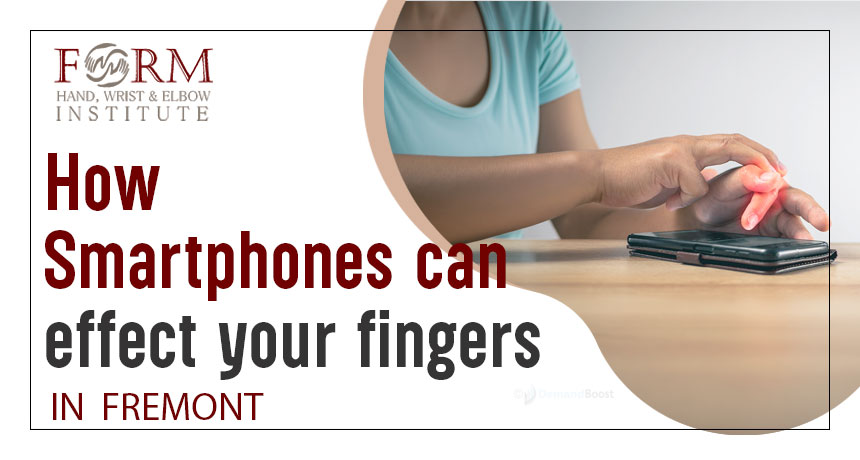
We rely on our smartphones more than ever in today’s world, using them for just about everything throughout the day. From texting and scrolling through social media to answering emails and watching videos, many people spend hours each day on their devices without realizing the strain this constant use can place on the hands, fingers, and wrists.
At FORM Hand Therapy, we regularly see the effects of this across patients of all ages. While smartphone use may seem harmless, repetitive movements and poor hand positioning can contribute to discomfort, stiffness, and pain, as well as long-term issues that affect overall hand function. Understanding how it impacts the upper extremities can help you recognize early warning signs and take steps to protect your hand and wrist health.
Smartphone Overuse: Common Conditions and Related Symptoms
- Texting Thumb: Constant typing, scrolling, and stretching the thumb across large screens can irritate the tendons that control thumb movement, resulting in inflammation and pain at the base of the thumb or along the wrist. Medically, this is often associated with De Quervain’s tenosynovitis.
- Text Claw: “Text claw” relates to a range of symptoms, such as discomfort, cramping, or fatigue in the fingers, hands, and forearms, that can develop after prolonged texting, scrolling, and phone holding. While not a medical diagnosis, it is commonly linked with muscle overuse, tendon strain, and repetitive strain injury (RSI).
- SmartPhone Pinky: A visible indentation or soreness some people notice in the pinky finger from using it to support or stabilize their phone. Because the pinky is not designed to bear sustained pressure, repeated stress over time can contribute to pain, stiffness and difficulty straightening the finger.
- Tendinitis: When you repeatedly tap, scroll, swipe, and hold devices in awkward positions, the tendons can become irritated and swollen. This can lead to pain, reduced mobility, and discomfort with movement in areas like the hands, fingers, and wrists.
- Carpal Tunnel Syndrome: Pressure on the median nerve as it passes through the wrist can compress it, triggering symptoms such as pain, numbness, tingling, or weakness in the hand and wrist, most commonly affecting the thumb, index, middle, and part of the ring finger.
- Trigger Finger: Occurs when the tendon in a finger becomes irritated, and the tendon sheath narrows, making it harder for the tendon to glide smoothly. This can cause the finger to catch or lock, often leading to pain or difficulty with normal movement.
Relief for Smartphone-Related Hand, Wrist, and Finger Pain in Fremont
Smartphones have indeed made our lives easier, but they’ve also contributed to a growing number of people experiencing hand, wrist, and arm-related concerns linked to device use. Not everyone will experience these issues, as risk varies from person to person. However, if you notice symptoms, it is important not to ignore them, as early attention can prevent progression and support better long-term comfort and function.
Simple strategies such as taking regular breaks, switching hands or grip positions, keeping wrists in a neutral position, using voice-to-text, and doing gentle stretches can reduce strain and support healthier phone habits.
If these tips do not provide relief and pain continues, it may be time to seek professional care, and we would be happy to assist. At FORM Hand Therapy in Fremont, Dr. Besh and his experienced team treat a wide range of hand, wrist, and elbow conditions with both non-surgical and surgical treatment options tailored to each patient’s needs.
Call us at 510-585-2535 or request your appointment online today, and let’s work together to help you find lasting relief and get back to feeling your best.